


The Colosseum is more than Rome’s most iconic monument. It is a layered historical environment that reveals something different at every level—from the entrance corridors to the Arena Floor and the panoramic upper tiers overlooking the city.
Many travelers arrive expecting to see a famous landmark. What they often do not expect is how immersive the experience can become when explored properly.
For us, the full Colosseum guided tour experience is not simply about entering the amphitheater. It is about understanding how every section functioned together, how people moved through the structure, and how the monument reflected the social and political realities of ancient Rome.
Understanding the Full Colosseum Experience
The Colosseum was designed as a complete system. Every archway, staircase, corridor, and seating section served a specific purpose.
Experiencing only one part of the monument provides an incomplete picture. The real impact comes from moving through its different levels and perspectives, understanding how spectators, gladiators, emperors, and workers each experienced the space differently.
This is why a structured Colosseum tour in Rome feels fundamentally different from a quick independent visit.
Entering the Colosseum and First Impressions
The experience begins before stepping inside.
How Entrance Procedures Work at the Colosseum
The Colosseum is one of the busiest attractions in Europe, and entrance logistics can shape the entire visit. Timed entries, security checks, and large visitor volumes make preparation essential.
This is where organized entry becomes important. A skip the line Colosseum experience significantly improves the flow of the visit, reducing unnecessary waiting and allowing more time inside the monument itself.
The First Interior Perspective
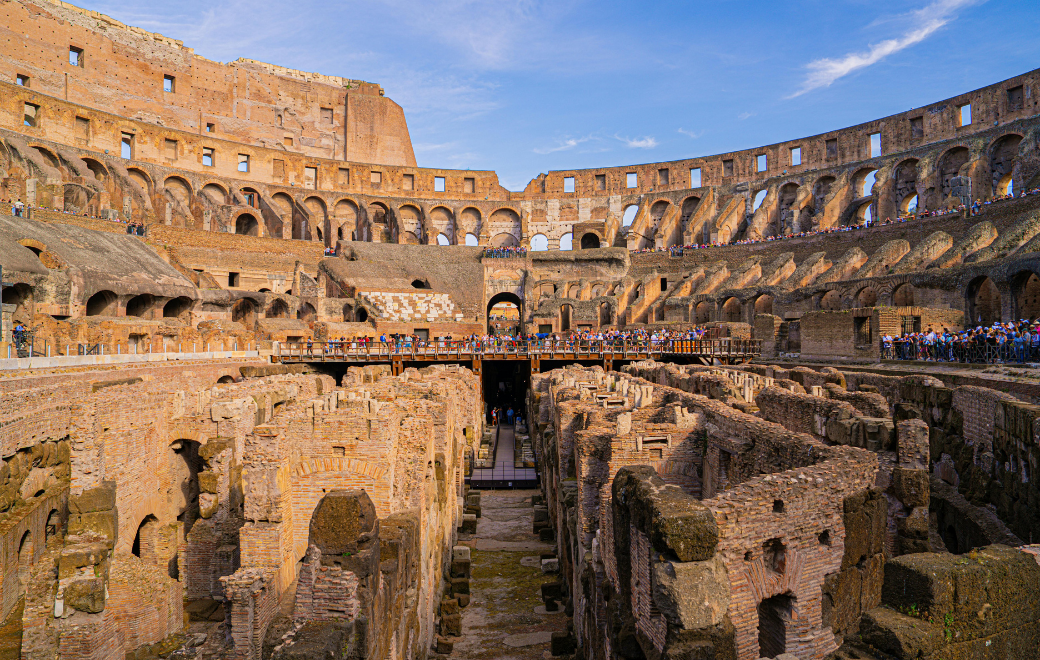
Once inside, the scale of the amphitheater immediately becomes clear. The elliptical structure rises dramatically around the Arena, creating one of the most recognizable architectural spaces in the world.
At this stage, many visitors focus on the monument visually. But understanding how the Colosseum functioned historically transforms the experience into something far more engaging.
Exploring the Arena Floor and Underground Perspective
The Arena Floor is one of the most impactful parts of the entire visit.
Standing at the Center of the Arena Floor
This was the stage where gladiators fought, animals appeared through trapdoors, and public spectacles unfolded before tens of thousands of spectators.
Standing here changes the perspective completely. Instead of viewing the Colosseum from above, you experience it from the center, surrounded by the immense height of the seating tiers.
This is one of the reasons why Colosseum Arena Floor access has become increasingly sought after among travelers visiting Rome.
Understanding the Hypogeum Beneath the Arena
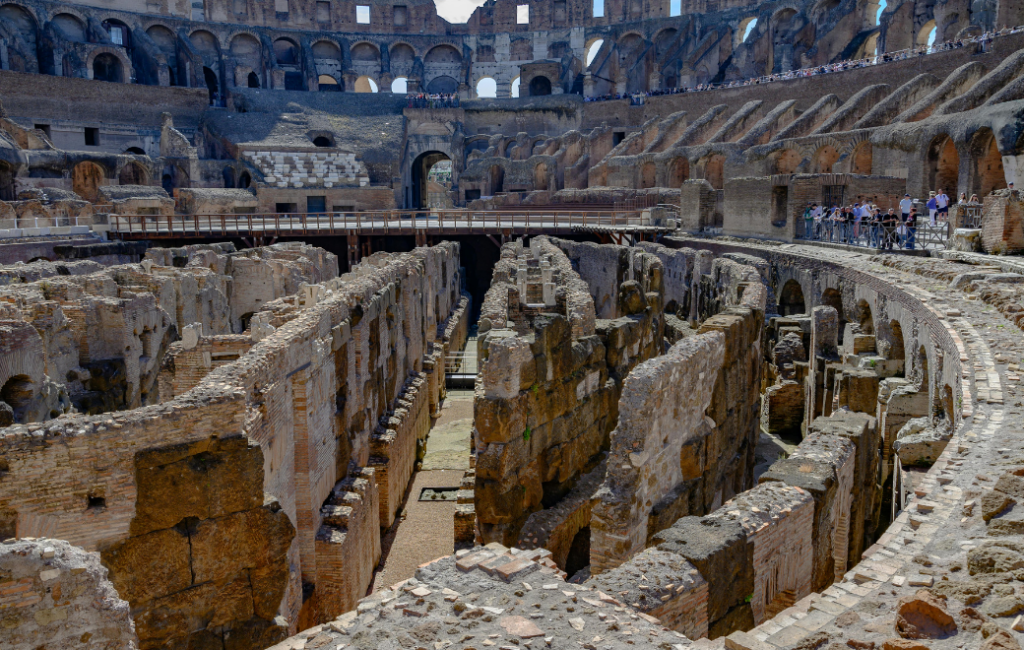
Below the Arena lay the hypogeum, an underground network of tunnels and chambers used to manage performers, animals, and stage machinery.
The engineering behind this system remains remarkable even today. Mechanical lifts, hidden entrances, and trapdoor systems allowed the Romans to create dramatic and highly organized spectacles.
Without explanation, many visitors overlook the significance of these structures. With context, the underground becomes one of the most fascinating parts of the monument.
What the Upper Levels Reveal About Ancient Rome
The upper levels provide an entirely different understanding of the Colosseum.
Views from the Upper Levels of the Colosseum
From above, the amphitheater’s scale and symmetry become fully visible. You begin to understand how the structure managed massive crowds while maintaining clear visibility toward the Arena below.
The panoramic views also connect the Colosseum to the wider landscape of Rome, including the Roman Forum and surrounding archaeological areas.
How Roman Society Was Reflected in Seating Arrangements
The seating structure mirrored Roman social hierarchy.
The closer spectators sat to the Arena, the higher their social status. Senators, nobles, soldiers, and ordinary citizens were all separated according to strict societal rules.
The architecture itself became a reflection of Roman order and control.
Understanding these details adds depth to the experience, transforming the monument from a visual attraction into a representation of Roman civilization itself.
Connecting the Colosseum with the Roman Forum and Palatine Hill
The Colosseum was never meant to stand alone.
Walking Through the Roman Forum with Historical Context
The Roman Forum served as the political and social center of ancient Rome. Temples, administrative buildings, and public spaces shaped daily life within the empire.
A proper Roman Forum tour helps connect the spectacle of the Colosseum with the broader functioning of Roman society.
Exploring Palatine Hill and Imperial Rome
Palatine Hill introduces another layer entirely. Traditionally considered the birthplace of Rome, it later became home to emperors and elite residences.
A combined Palatine Hill tour completes the narrative, linking mythological origins, political power, and entertainment into one cohesive experience.
How Guided Tours Transform the Visit
There is a major difference between seeing the Colosseum and understanding it.
Historical Interpretation Matters
The Colosseum contains layers of meaning that are not always immediately obvious. Architectural choices, social organization, and engineering systems require interpretation.
A guided experience allows visitors to move beyond surface-level observation and connect with the monument intellectually and emotionally.
Why Small Group Tours Improve the Experience
Large groups can make complex sites feel crowded and disconnected.
Smaller Rome guided tours allow for:
- Better visibility
- Easier movement
- More interaction
- A calmer pace
This creates a more immersive and personal experience, especially inside busy environments like the Colosseum.
Planning the Best Time to Visit the Colosseum
Timing plays a major role in shaping the quality of the experience.
Best Times of Day for Visiting the Colosseum
Early mornings and late afternoons generally provide the most comfortable conditions:
- Softer temperatures
- Better lighting
- Reduced crowds
- A calmer atmosphere
For travelers following a broader Rome travel guide, this can significantly improve the overall pace of the trip.
Seasonal Considerations
Spring and autumn tend to offer the best balance between weather and visitor volume. Summer remains extremely popular but can become intense during midday hours.
Planning carefully allows the experience to feel more relaxed and immersive.
Experiencing Ancient Rome Beyond the Monument
The Colosseum is one of the most important symbols of ancient Rome, but its meaning becomes stronger when experienced within the broader context of the city.
Walking through nearby archaeological areas, exploring surrounding neighborhoods, and understanding how ancient and modern Rome coexist creates a much richer perspective.
The monument itself is extraordinary, but the surrounding environment gives it life.
Experience the Colosseum with Us
For us, the Colosseum is not simply a place to visit, it is a story that unfolds gradually as you move through its spaces.
Our small group tours are designed to create a more complete experience, combining expert storytelling with thoughtful pacing and smooth organization. From the entrance corridors to the Arena Floor and upper levels, we guide visitors through the monument in a way that feels immersive, clear, and personal.
We also connect the Colosseum with the Roman Forum and Palatine Hill, helping travelers experience Ancient Rome as an interconnected world rather than isolated landmarks.
If you are planning your visit to Rome, we invite you to explore the Colosseum with us through experiences designed to go beyond sightseeing and create a deeper connection with the history of the city.