
Welcome to Ancient Rome

The Ultimate Guide to Visiting the Colosseum in Rome

History, Secrets, Tips & What to See

Step into nearly 2,000 years of history as you explore the legendary Colosseum of Rome, one of the world’s most iconic ancient monuments and the heart of the Roman Empire. Visiting the Colosseum is more than just seeing an ancient arena, it is walking through the same corridors once crowded with emperors, gladiators, Roman citizens, and exotic animals brought from across the empire.

Whether you’re a history lover, a cultural traveler, or a first-time visitor to Rome, the Colosseum offers an unforgettable experience filled with breathtaking architecture, hidden underground chambers, panoramic viewpoints, and fascinating stories that shaped Western civilization.

With our expertly crafted guides, insider tips, and detailed maps, you’ll discover the best Colosseum entrances, what each section contains, how to avoid long lines, and how to combine your visit with the Roman Forum and Palatine Hill for the perfect ancient Rome itinerary.

Plan your visit like a pro and make the most of every moment inside the world’s most famous amphitheater.

Colosseum Sections

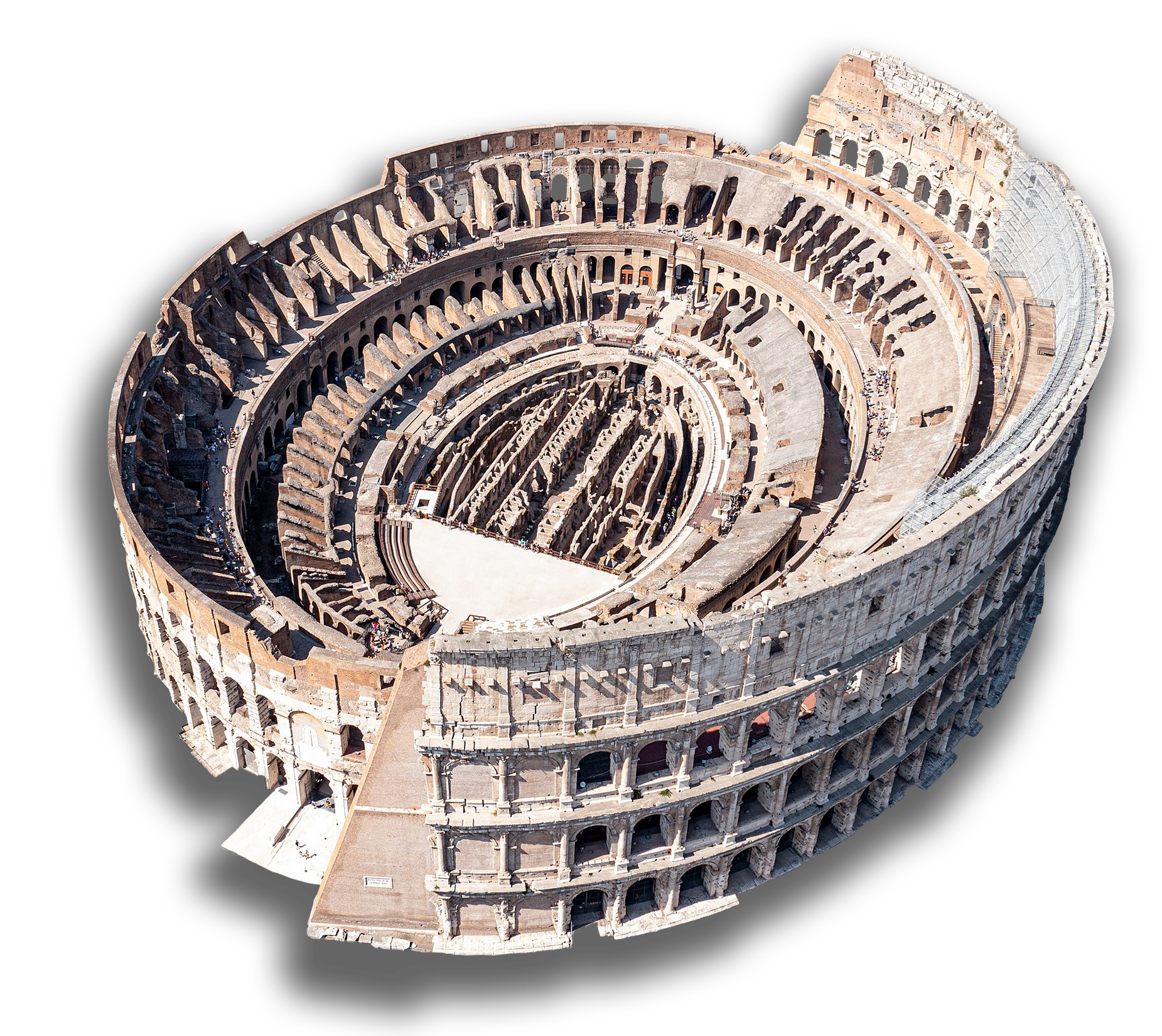
The Colosseum, completed nearly 2,000 years ago, is the largest amphitheater built by the Roman Empire and remains one of the world’s most iconic ancient landmarks. Once used for gladiator battles, animal hunts, and public ceremonies, it showcased Rome’s engineering skill and cultural influence.

Today, visitors can explore its tiered seating, reconstructed arena floor, and the remains of the hypogeum—an underground network that supported the spectacles above. The monument also illustrates how Romans organized massive crowds and designed advanced architectural systems. Together with the Roman Forum and Palatine Hill, the Colosseum offers a clear and engaging introduction to the political, social, and cultural life of ancient Rome.
Colosseum Sections
Arena Section The Underground (Hypogeum) 1st Tier (Podium Level) 2nd Tier (Maenianum Primum) 3rd Tier & Attic Section The Belvedere & Panoramic Upper Tier

Arena Section

Walk onto the arena where gladiators once fought for glory. Today, a modern platform allows visitors to stand at the very center of the amphitheater, offering a powerful 360° view of the seating tiers and the underground chambers below.

In ancient times, the arena served as the main stage for gladiatorial combats, animal hunts, and grand public spectacles, making it the most dramatic and important performance space of the Colosseum.

This restored floor recreates the scale and intensity of these events, helping visitors visualize how the shows unfolded before tens of thousands of spectators. It’s an ideal spot for immersive guided tours, dramatic photos, and a deeper appreciation of the Colosseum’s original atmosphere and engineering.

The Underground (Hypogeum)

A labyrinth of tunnels, cages, elevators, and holding chambers used to prepare animals and gladiators before their entrance to the arena. Recently restored and now open to visitors on special tours, the hypogeum reveals the complex engineering behind ancient Roman entertainment.

In ancient times, this underground system served as the operational heart of the Colosseum, coordinating the movement, staging, and dramatic appearances that powered every spectacle above.

Exploring this area allows visitors to understand how the Romans used advanced mechanisms and precise organization to create the thrilling shows that captivated thousands.

1st Tier (Podium Level)

These seats sit closest to the arena, featuring preserved stone benches, original corridors, and wide passages built for Rome’s highest-ranking spectators. Historically, this tier was reserved for senators, magistrates, Vestal Virgins, and other elite officials, offering the most privileged view of the spectacles.

In ancient times, the 1st Tier served as the exclusive front-row area for the most powerful figures in Roman society, forming the political and social center of the audience.

Today, visitors can explore this level to appreciate its refined construction, clear sightlines, and the architectural details that reflect the prestige of its original occupants.

2nd Tier (Maenianum Primum)

Located just above the elite podium, the 2nd Tier includes structured seating and original stairways designed for Rome’s equestrian class and wealthy citizens. This level offered an excellent balance of proximity and elevation, giving spectators a clear and comfortable view of the arena.

In ancient times, the 2nd Tier served as the primary seating area for the influential equestrian order, providing a prestigious yet slightly more accessible space from which to watch major events.

Today, visitors can explore this tier to see how Roman architecture organized social ranks while ensuring strong visibility and efficient movement throughout the amphitheater.

3rd Tier & Attic Section

Located higher above the arena, the upper galleries were traditionally occupied by ordinary Roman citizens and later expanded with the wooden Attic section for the lower classes. From these levels, visitors enjoy wide panoramic views of the Colosseum’s interior, clearly seeing the arena’s shape, the seating arrangement, and the surrounding monuments such as the Roman Forum and Palatine Hill.

In ancient times, these upper tiers served as the main viewing zones for the general public and lower social classes, providing affordable access to the spectacles while allowing thousands of people to watch events from high, spacious vantage points.

These elevated tiers highlight how the Colosseum was designed to accommodate massive crowds while maintaining visibility for all.

The Belvedere & Panoramic Upper Tier

The Belvedere is the highest accessible viewpoint in the Colosseum, located in the uppermost part of the ancient Attic section. From here, visitors can enjoy 360° views of the arena and impressive panoramas of Rome’s historic center.

In ancient times, this upper tier served as the main seating area for the lower classes and larger crowds, offering a broad vantage point from which thousands could watch the spectacles below.

Today, access is limited to select guided tours, making the Belvedere a premium option for visitors seeking elevated views and a deeper understanding of the monument’s overall structure.
Roman Forum Guide: Map, Highlights & Visitor Information

Landmarks, Layout, Routes & Essential Visitor Information

Discover the Roman Forum, the central hub of political, religious, and commercial life in ancient Rome. This archaeological area brings together temples, arches, basilicas, and civic buildings that once formed the core of the Roman Empire. Today, visitors can walk through clearly marked pathways and explore the ruins following a structured route that highlights the most important monuments.

The Forum includes major landmarks such as the Temple of Saturn, the Temple of Julius Caesar, the Arch of Titus, the Basilica of Maxentius, the House of the Vestal Virgins, and the Curia, the ancient Senate House. Each area represents a different function of Roman daily life, from government and administration to religion, public gatherings, and ceremonial events.

With our guided layout, detailed maps, and clear orientation points, you can easily understand how the Roman Forum was organized, which areas to visit first, and how to connect your route with the Colosseum and Palatine Hill for a complete overview of Ancient Rome’s archaeological park.

This structured guide to navigate the Roman Forum efficiently and gain a clear understanding of the historical significance behind each monument and its role in the ancient city.

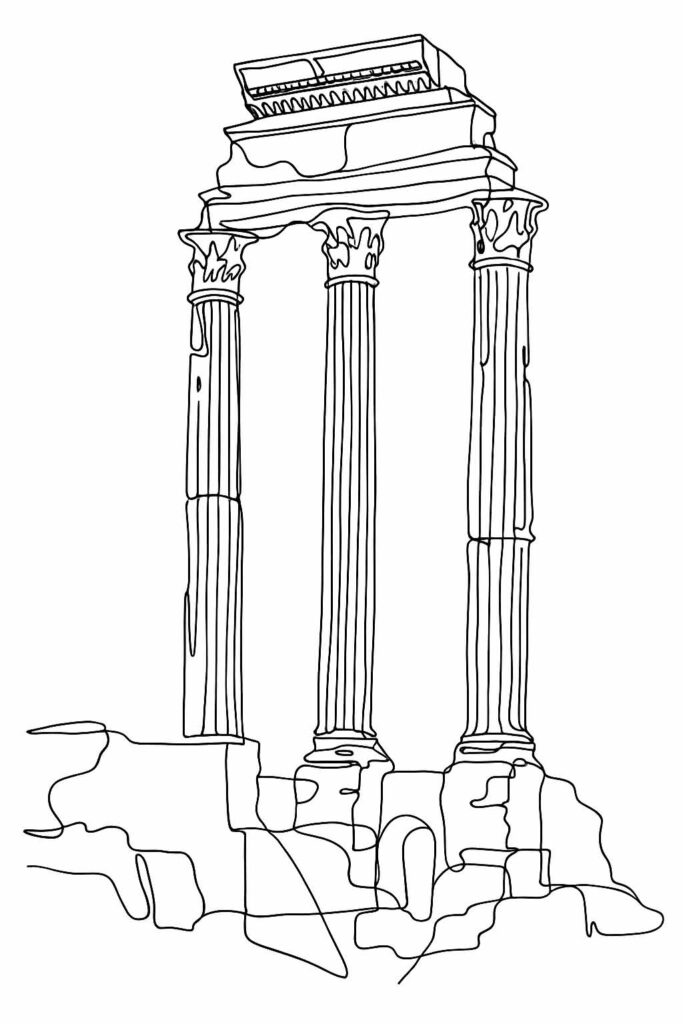
Temple of Castor and Pollux

Easily recognized by its three standing columns, this temple is one of the Forum’s iconic landmarks. During the Republican and Imperial periods, it was used for political meetings, important public affairs.

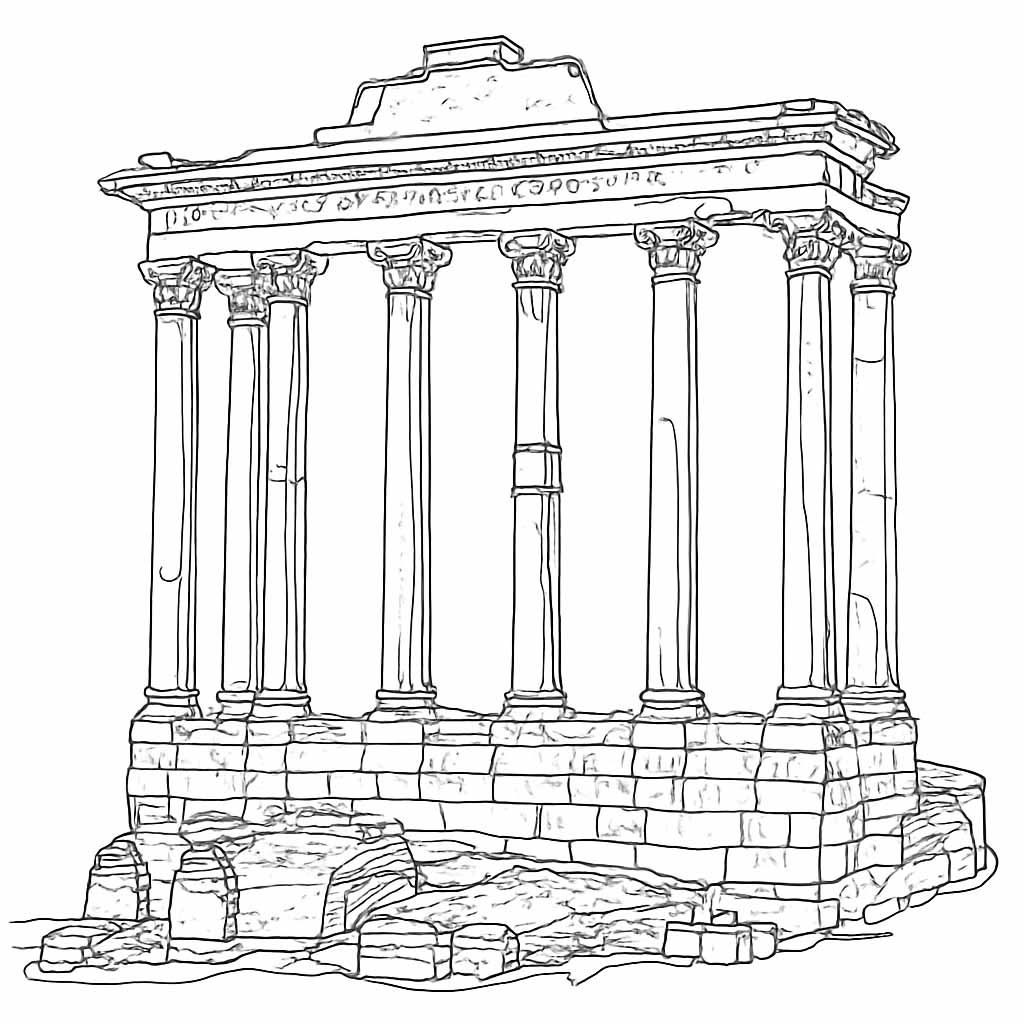
Temple of Saturn

One of the oldest and most symbolic temples in the Roman Forum. It held the Roman state treasury (Aerarium), making it a place of major economic and political importance in Ancient Rome.

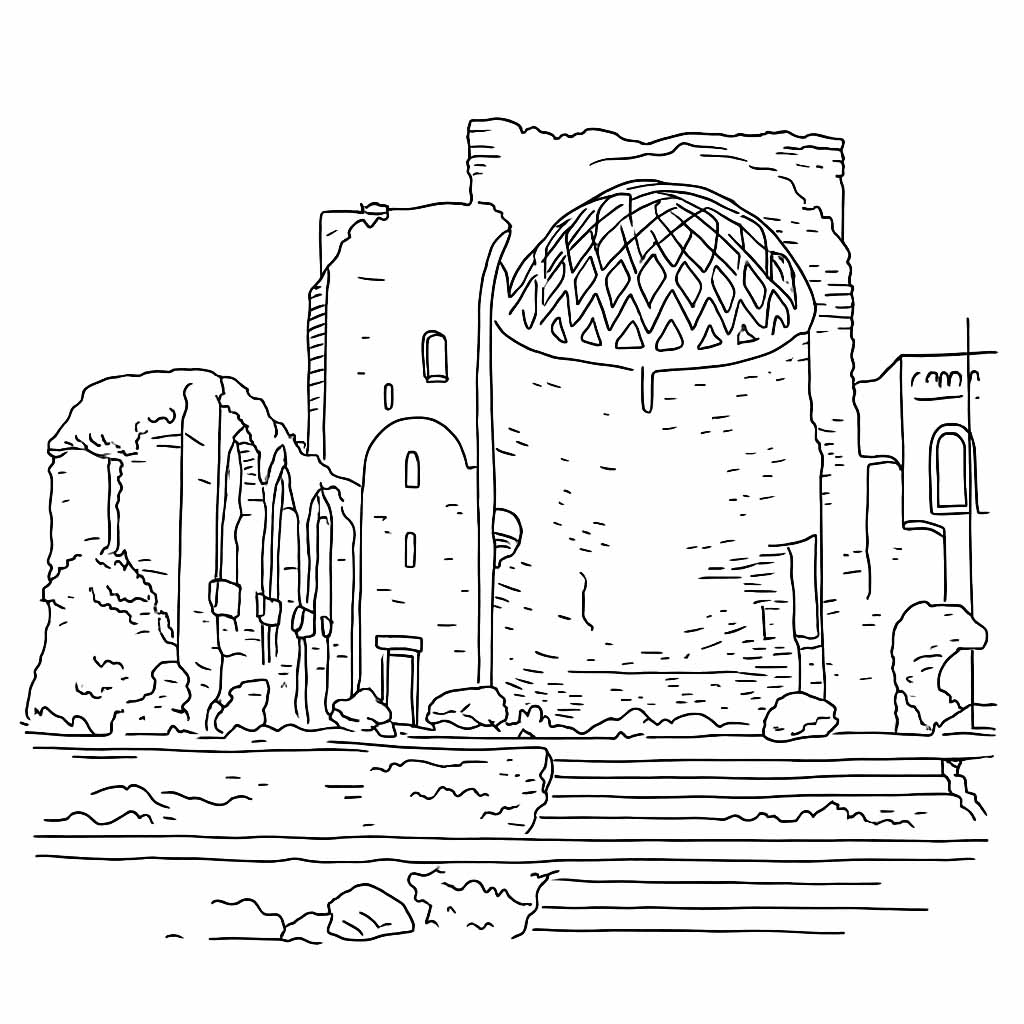
Temple of Venus and Roma

The largest temple ever built in Ancient Rome, dedicated to Venus and the personification of the city. Its strategic location near the Colosseum highlights its importance in both religious, urban planning.

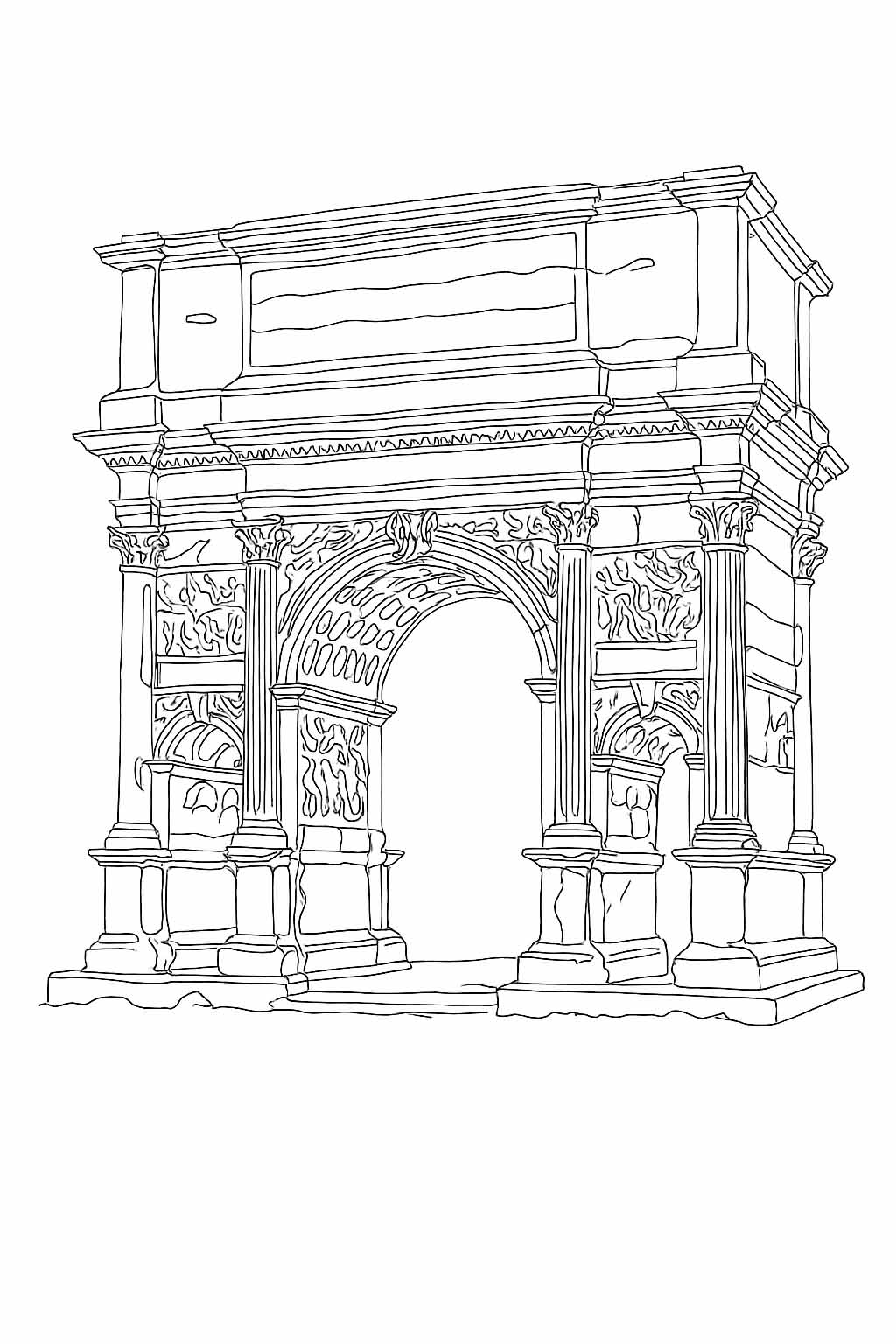
Arch of Septimius Severus

One of the best-preserved triumphal arches in Rome, built to celebrate military victories. Located at the northwestern entrance of the Forum, it stands as a strong symbol of imperial power.

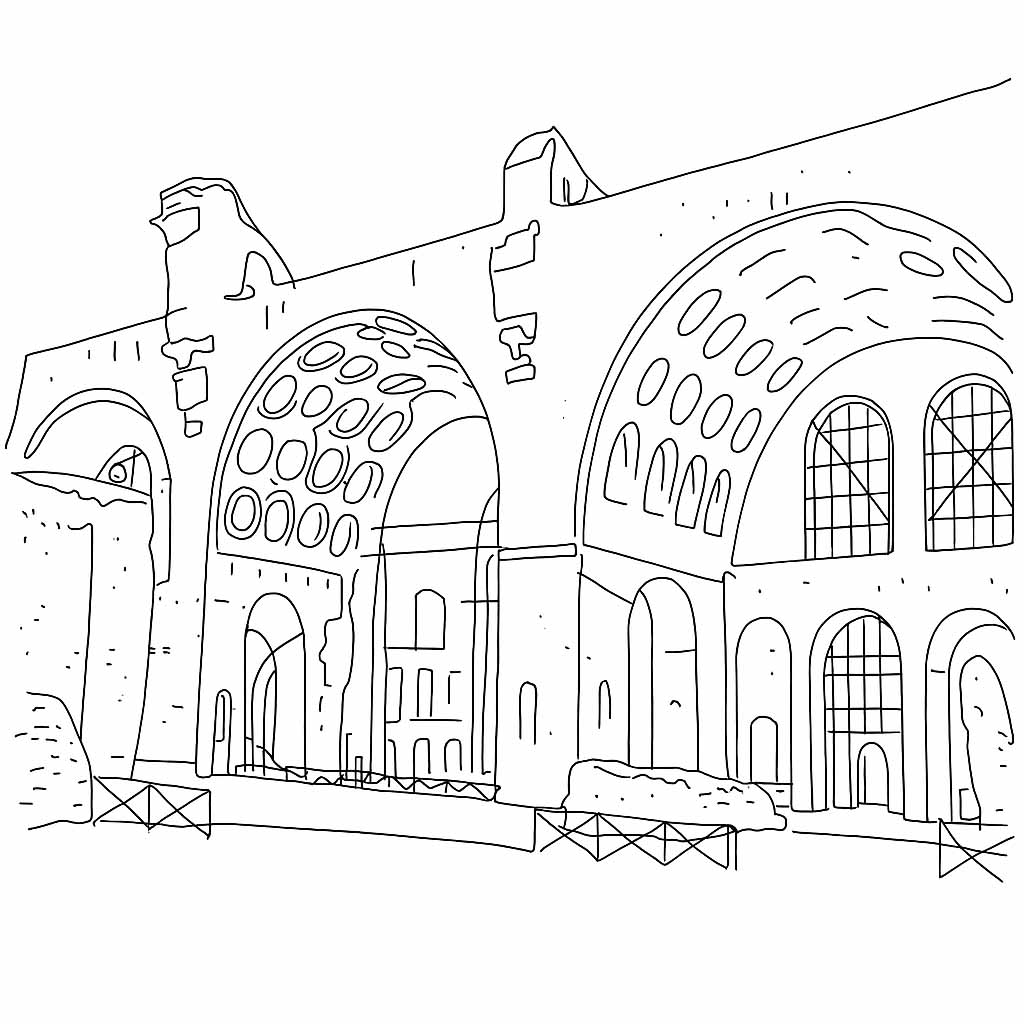
Basilica of Maxentius and Constantine

The largest structure in the Roman Forum and a masterpiece of Roman engineering. Its massive scale and innovative architecture reflect the power and ambition of the late Roman Empire.

“SUPER Sites” at Roman Forum & Palatine & Colosseum

What They Are & Why They Matter?

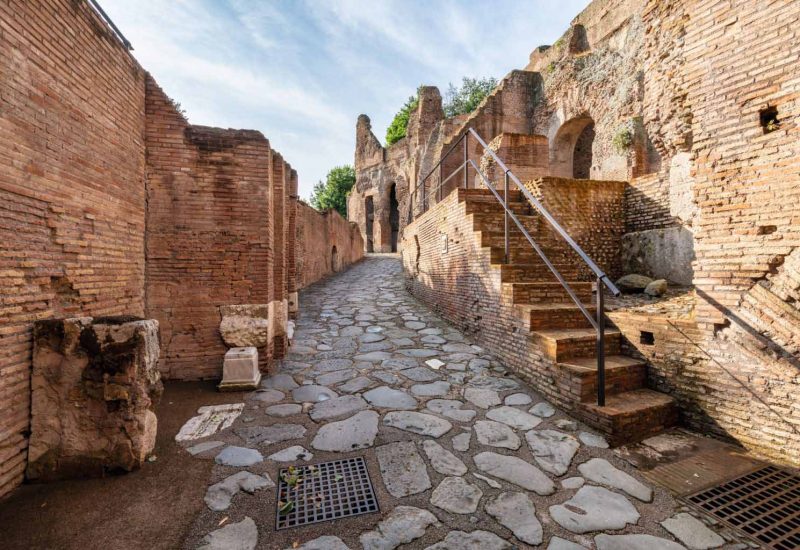
The SUPER Sites are a collection of exclusive archaeological areas inside the Roman Forum and Palatine Hill that are can only be visited with Full access Colosseum entry ticket or a Colosseum & Roman Forum guided tour. Unlike the regular visitor route, which shows only the main streets and exterior ruins, the SUPER Sites allow guests to step inside restricted imperial residences, early Christian churches, restored ancient rooms, and protected archaeological spaces that reveal the private side of Ancient Rome.

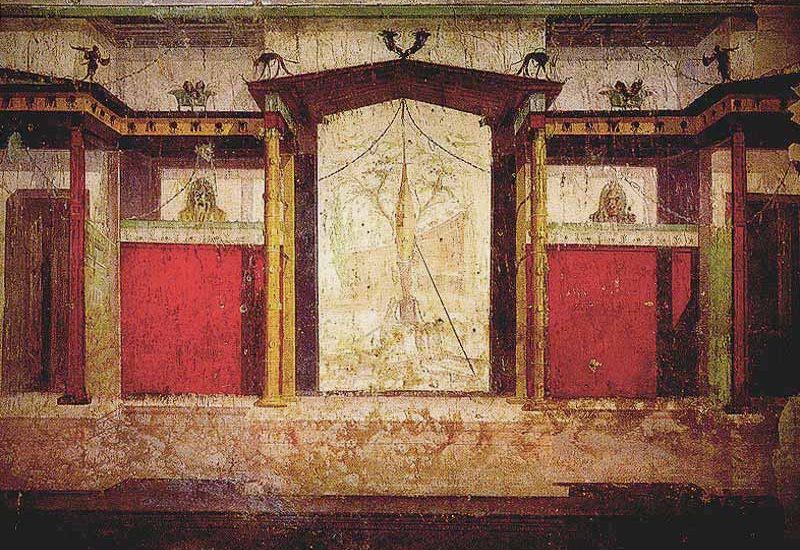
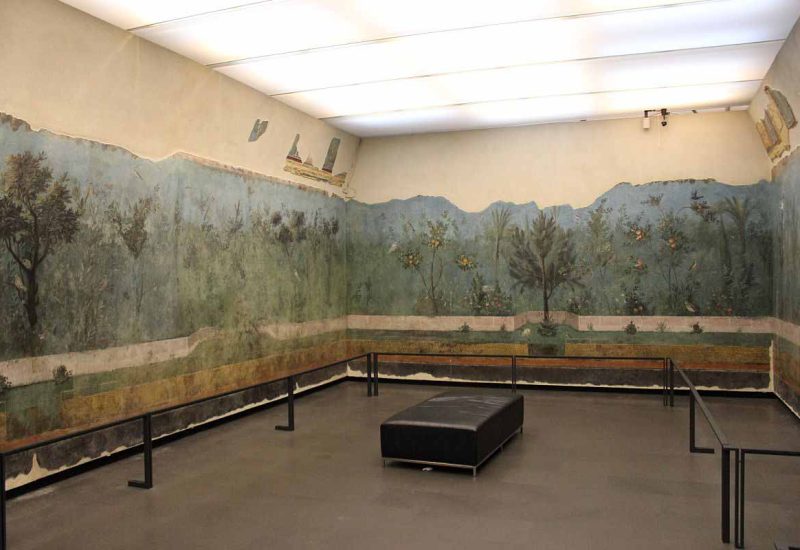
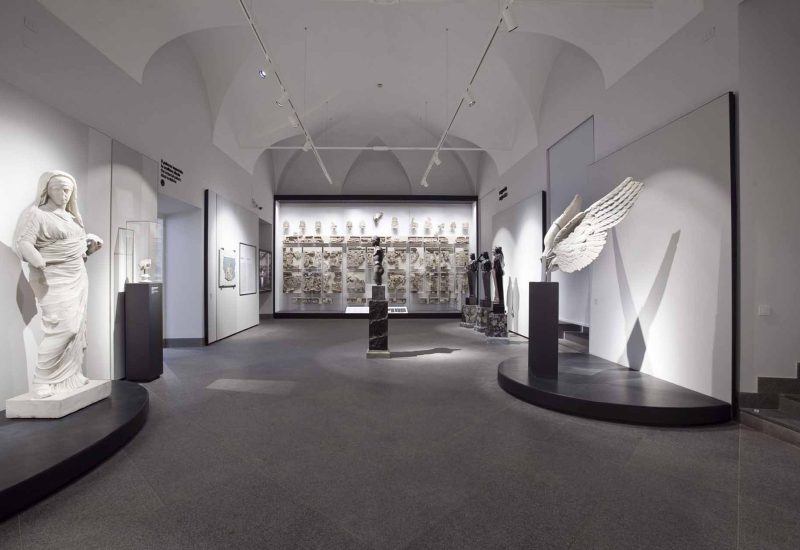
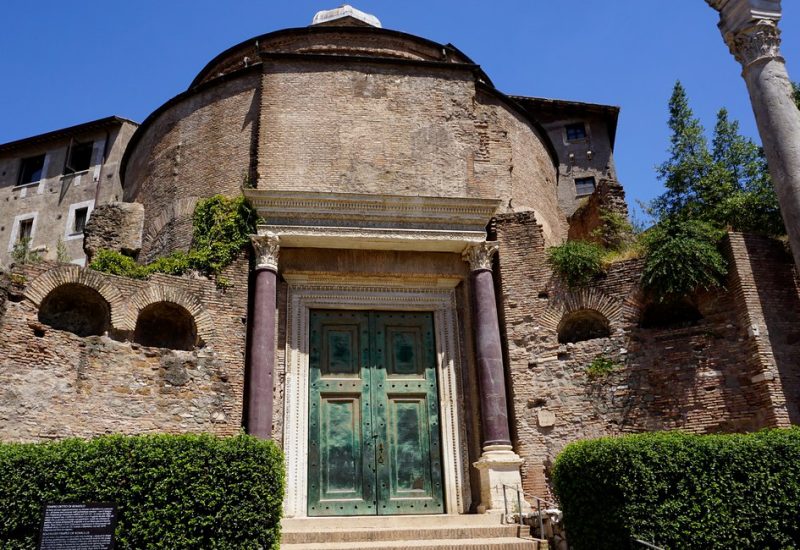
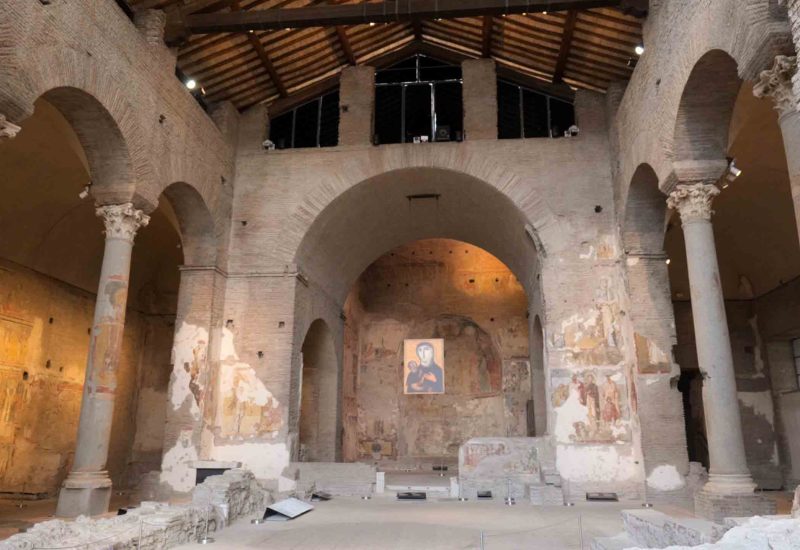
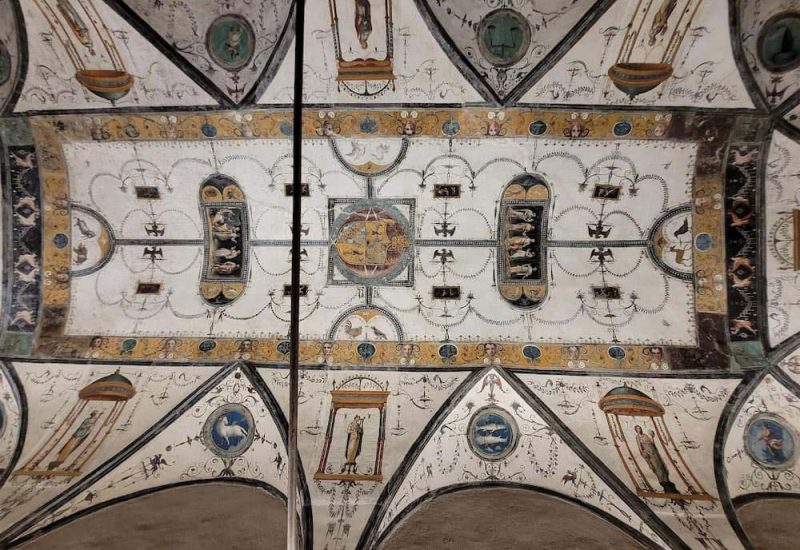
In simple terms, SUPER Sites are the “hidden treasures” of the Roman Forum—they are not extra monuments added for tourism, but rather original structures normally closed to the public to protect delicate frescoes, interiors, and architectural remains. With a Forum Pass SUPER or a Full Experience Colosseum guided tour, visitors gain access to rare locations such as the House of Augustus, House of Livia, the Temple of Romulus, Santa Maria Antiqua, the Palatine Museum, and exhibition areas inside the Domus Tiberiana.

These sites are important because they offer a deeper, more authentic understanding of how Romans lived, ruled, worshipped, and shaped the empire. Walking through SUPER Sites means experiencing Ancient Rome beyond the standard ruins, including spaces with original wall paintings, imperial decorations, private chambers, and artifacts that reveal details of daily life and imperial culture. For travelers who want more than just the main highlights, the SUPER Sites provide one of the most enriching and comprehensive archaeological experiences in Rome, making them a top choice for anyone booking a Colosseum guided tour, Roman Forum exploration, or Palatine Hill visit.

Item #1

Lorem ipsum dolor sit amet, consectetur adipiscing elit. Ut elit tellus, luctus nec ullamcorper mattis, pulvinar dapibus leo.

Lorem ipsum dolor sit amet, consectetur adipiscing elit. Ut elit tellus, luctus nec ullamcorper mattis, pulvinar dapibus leo.

Lorem ipsum dolor sit amet, consectetur adipiscing elit. Ut elit tellus, luctus nec ullamcorper mattis, pulvinar dapibus leo.