


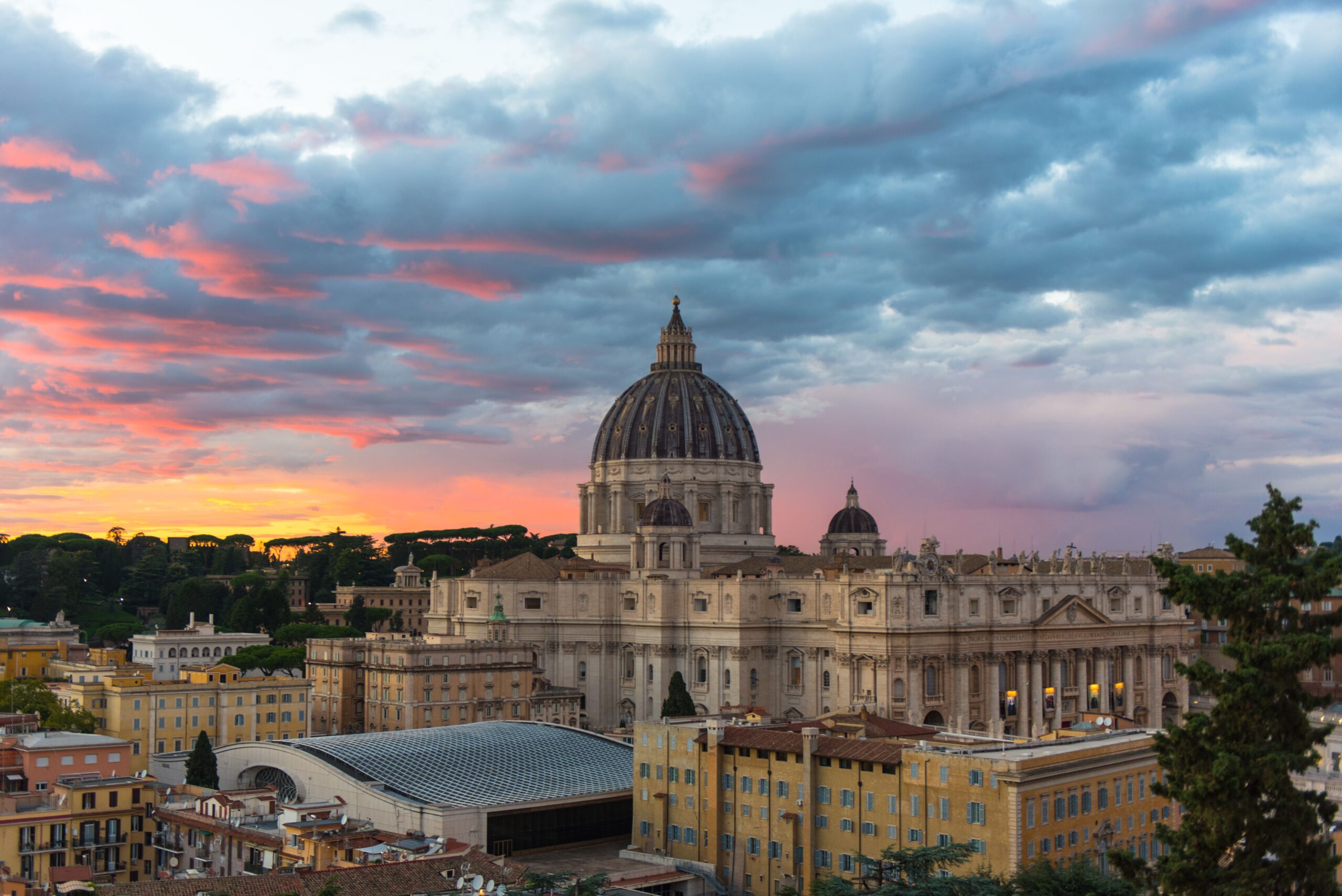
Standing at the end of St. Peter’s Square, St. Peter’s Basilica is impressive before you even walk through the doors. Its monumental façade, vast piazza, soaring dome, and extraordinary interior make it one of the defining sights of Rome and Vatican City.
But visiting the Basilica is slightly different from visiting a conventional museum or tourist attraction. Security procedures, dress requirements, religious celebrations, and access arrangements can all affect your experience. The Basilica remains an active place of worship, so its schedule can also change according to liturgical events and Vatican ceremonies.
For that reason, a little preparation goes a long way.
We’ve created this St. Peter’s Basilica visitor guide to help you understand what to expect before arriving, what deserves your attention once inside, and how to organize your Vatican itinerary without making the day feel rushed.
Why St. Peter’s Basilica Belongs on Every Rome Itinerary
Even in a city filled with extraordinary churches, St. Peter’s Basilica is on another scale.
The present Basilica was constructed over more than a century, with some of the most important figures in Renaissance and Baroque architecture contributing to its design. Michelangelo, Bramante, Carlo Maderno, and Gian Lorenzo Bernini are all connected to the building visitors experience today.
The result is not simply a church filled with famous artworks. Architecture, sculpture, symbolism, and religious history come together within one enormous space.
For first-time visitors to Rome, we consider the Basilica an essential part of understanding the Vatican. It also provides an important contrast with the ancient history found at the Colosseum, Roman Forum, and Palatine Hill.
Understanding Entry to St. Peter’s Basilica
One of the most important things to understand before you visit St. Peter’s Basilica is that entry procedures differ from those of the Vatican Museums.
Arriving at St. Peter’s Square
Visitors approach the Basilica through St. Peter’s Square, the monumental piazza designed by Bernini.
Take a moment to appreciate the square before heading inside. The sweeping colonnades were conceived to create a sense of embrace, while the Egyptian obelisk at the centre adds another historical layer to the space.
The square can become extremely busy, particularly during peak travel periods and around major religious events.
Arriving prepared and knowing where you need to go can make the beginning of your visit considerably easier.
Preparing for Security Before Entry
Visitors must pass through security screening before entering the Basilica.
Waiting conditions vary substantially according to the season, time of day, visitor numbers, and Vatican events. This is one reason we recommend allowing flexibility in your itinerary rather than scheduling several major attractions too closely together.
Remember that the Basilica is an active religious site. Access procedures and opening arrangements can change for ceremonies, Papal events, or other operational reasons, so checking current information close to your visit is always sensible.
St. Peter’s Basilica Dress Code and Security Rules
The St. Peter’s Basilica dress code is one of the details travelers should consider before leaving their hotel.
What to Wear Inside St. Peter’s Basilica
As a place of worship, the Basilica requires respectful clothing. Visitors should ensure that shoulders and knees are covered.
This is particularly important during Rome’s hot summer months, when tourists naturally dress for high temperatures. A lightweight scarf, overshirt, or other suitable layer can be useful when moving between outdoor sightseeing and religious sites.
Footwear also matters for practical reasons. A Vatican day usually involves considerable walking, so comfortable shoes are much more valuable than formal ones.
We recommend thinking about your clothing before arriving rather than relying on being able to solve the problem at the entrance.
What to See Inside St. Peter’s Basilica
The interior can be overwhelming on a first visit. The sheer scale makes it difficult to know where to look.
Rather than trying to examine every chapel and monument, we recommend focusing on several masterpieces that help tell the Basilica’s story.
Michelangelo’s Pietà
Michelangelo’s Pietà is one of the first major works many visitors encounter.
Created when Michelangelo was still in his twenties, the marble sculpture depicts the Virgin Mary holding the body of Christ. Its extraordinary detail and emotional restraint have made it one of the most celebrated sculptures of the Renaissance.
Seeing it in its intended religious setting creates a very different experience from encountering a masterpiece in a conventional gallery.
Bernini’s Baldachin and the Papal Altar
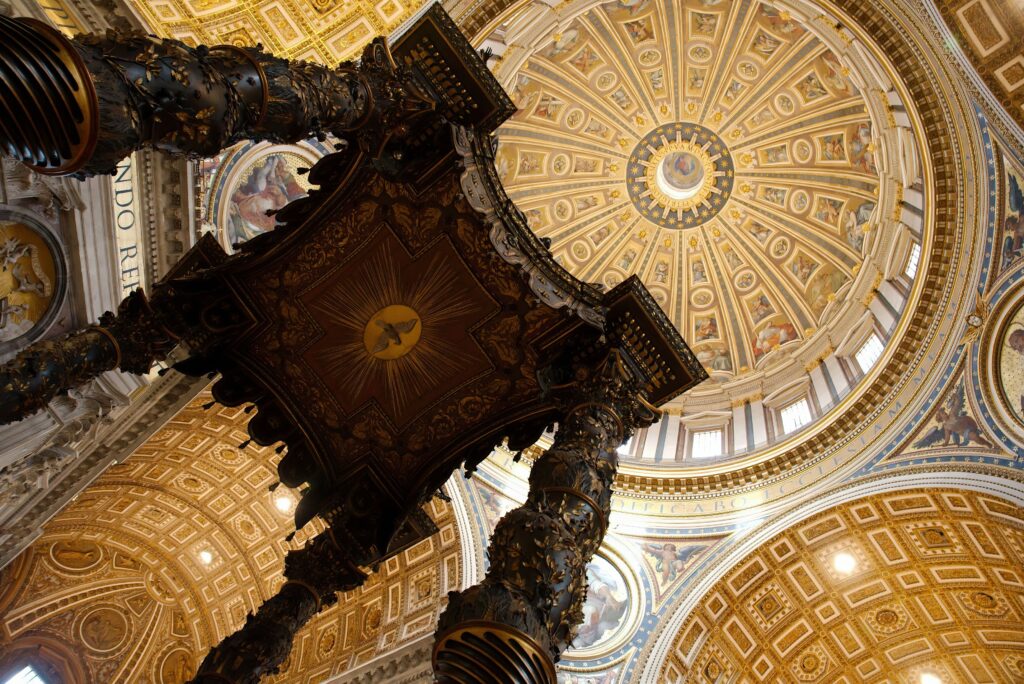
At the heart of the Basilica stands Bernini’s monumental bronze baldachin.
Its twisting columns rise dramatically beneath Michelangelo’s dome, visually connecting the altar with the immense architecture above.
This central area also helps visitors understand how carefully the Basilica was designed. Architecture, sculpture, and religious symbolism were conceived as parts of a unified experience rather than independent decorative elements.
The Tomb of St. Peter
According to Christian tradition, St. Peter was buried in this area after his martyrdom in Rome.
The association between the site and the apostle is fundamental to understanding why the Basilica was built here and why it holds such significance within Catholicism.
For visitors interested in history rather than religion alone, this connection provides essential context for understanding how Rome evolved from an imperial capital into a centre of Christianity.
Visiting St. Peter’s Basilica Dome
For travelers comfortable with heights and stairs, the St. Peter’s Basilica dome can become one of the most memorable parts of a Vatican visit.
What to Expect When Visiting the Dome
The dome experience is separate from simply walking through the main Basilica and requires additional time.
Depending on the access option available, visitors may be able to complete part of the ascent using an elevator before continuing on foot. The final section becomes increasingly narrow and curved as the staircase follows the shape of the dome.
It can feel confined, so visitors uncomfortable with tight spaces should consider this before beginning the climb.
Views from the Top of St. Peter’s Basilica
The reward is one of Rome’s most distinctive viewpoints.
From above, the geometry of St. Peter’s Square becomes remarkably clear. Bernini’s colonnades, Vatican City, rooftops, and the wider cityscape stretch out below.
The experience also provides an entirely different appreciation of the Basilica’s architecture. What appears monumental from ground level becomes even more extraordinary when viewed from within and above the dome.
Allow extra time if the dome is a priority rather than treating it as a quick addition to your visit.
The Best Time to Visit St. Peter’s Basilica
There is no single perfect hour for every traveler, but timing can significantly influence your experience.
Morning vs Afternoon Visits
Early mornings can offer cooler temperatures and a calmer atmosphere, particularly outside the busiest periods.
Later visits can also work well depending on the season and the Basilica’s schedule. What matters most is avoiding an itinerary that leaves no flexibility for security procedures or unexpected changes.
During summer, heat becomes another consideration. St. Peter’s Square offers limited relief from strong midday sun, making morning visits particularly appealing.
Planning Around Papal Events and Religious Celebrations
St. Peter’s Basilica is not simply a historic monument. It remains one of the world’s most important active Catholic churches.
Papal audiences, Masses, major feast days, and special ceremonies can affect access to the Basilica or areas of St. Peter’s Square.
We always recommend checking the current Vatican calendar when planning around an important date. This is particularly relevant during Easter, Christmas, major Catholic feast days, and other significant events.
Planning St. Peter’s Basilica and the Vatican in One Day
Many visitors naturally want to combine the Basilica with the Vatican Museums and Sistine Chapel.
It can be done, but pacing matters.
Combining the Basilica with the Vatican Museums
The Vatican Museums are enormous. Even a focused visit can take several hours, and museum fatigue is real.
Trying to see every gallery before immediately rushing into another major attraction rarely creates the best experience.
Instead, build breathing room into your schedule. Allow time for lunch, hydration, and a short break between major visits.
If you’re creating a wider Rome travel guide or multi-day itinerary, consider dedicating a substantial part of one day to the Vatican area rather than trying to combine it with the Colosseum and Ancient Rome.
The Colosseum, Roman Forum, and Palatine Hill work much better as a separate day or half-day experience.
Practical Tips for a Smooth Basilica Visit
Small decisions can make your visit considerably easier.
What to Bring for Your Basilica Visit
We recommend keeping your day bag simple. Useful items include:
- Comfortable walking shoes
- A reusable water bottle
- Smartphone
- Earphones if using a digital audio guide
- Portable charger
- Appropriate clothing or a light layer
- Essential travel documents
During warmer months, sunscreen and a hat are useful while waiting or walking through St. Peter’s Square.
Most importantly, avoid overloading your schedule. The Basilica deserves time.
A visit becomes much more rewarding when you can stop, look upward, notice details, and understand the relationship between the artworks and architecture around you.
Experience St. Peter’s Basilica with Us
St. Peter’s Basilica is one of those places where preparation and context make a noticeable difference. Knowing where to meet, understanding the entry process, arriving appropriately dressed, and having the right information before you enter allows you to focus on the experience itself.
At Guide Us Tours, we design our Rome experiences around that principle.
Our small group tours and carefully organized experiences focus on smooth logistics, thoughtful pacing, and expert storytelling. Whether you’re discovering the Vatican area, planning a St. Peter’s Basilica experience, or exploring Ancient Rome through our Colosseum and Roman Forum tours, we want each part of your itinerary to feel connected rather than rushed.
If St. Peter’s Basilica is part of your Rome plans, explore our Vatican experiences alongside our other Rome guided tours and build a journey that combines the city’s ancient history, artistic masterpieces, and extraordinary cultural heritage at a pace that lets you truly appreciate it.